menus

slider

Friday, 27 May 2016

PARTS OF A MOTHERBOARD AND THEIR FUNCTION

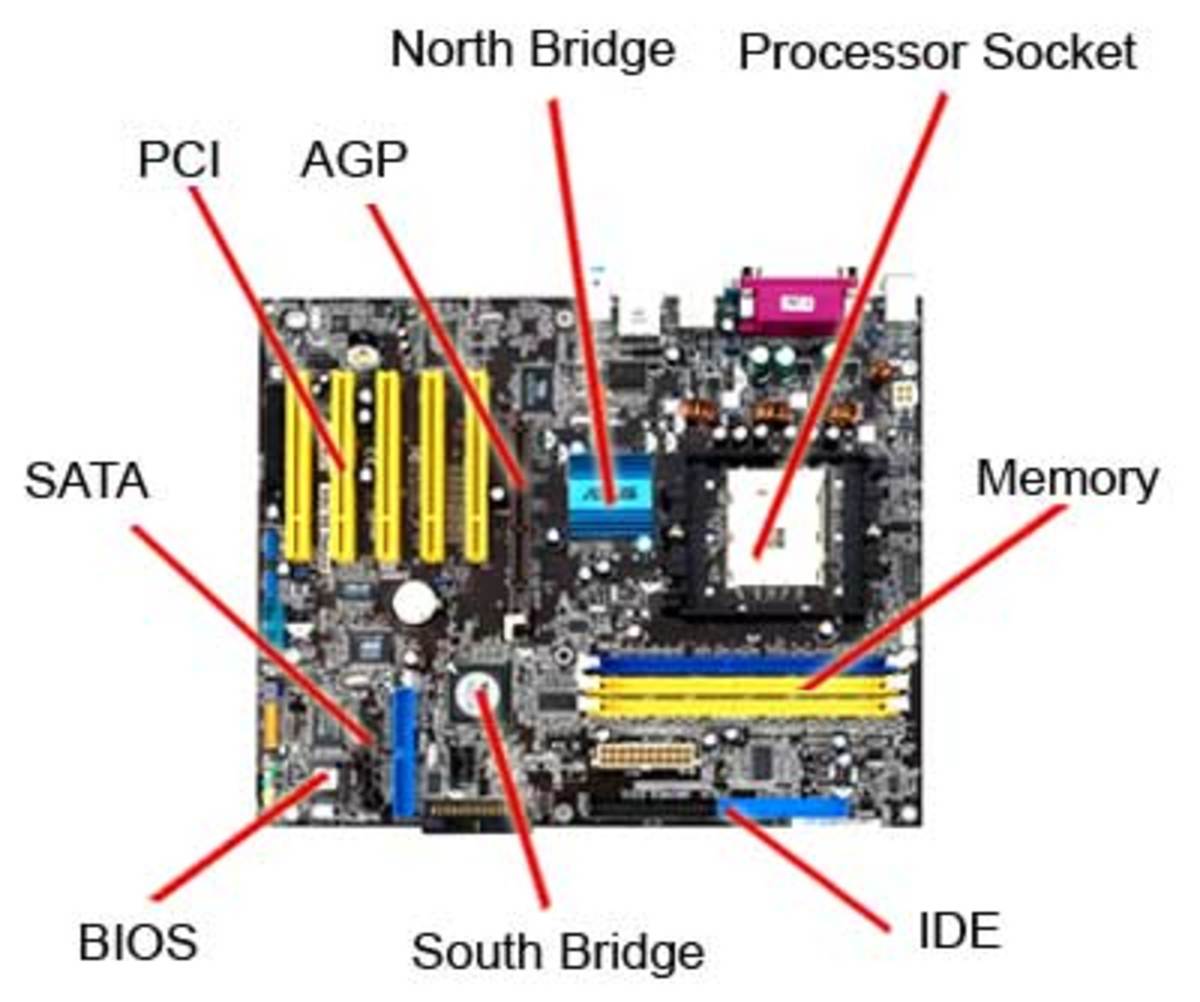
Some of the major components of a motherboard.
The main printed circuit board in a computer is known as the motherboard. Other names for this central computer unit are system board, main board, or printed wired board (PWB). Motherboard is sometimes shortened to Mobo.
Numerous major components, crucial in the functioning of the computer, are attached to the motherboard. These include the processor, memory, and expansion slots. The motherboard connects directly or indirectly to every part of the PC.
The type of motherboard installed in a PC has a great effect on a computer's system speed and expansion capabilities.

Major Motherboard Components and Their Functions
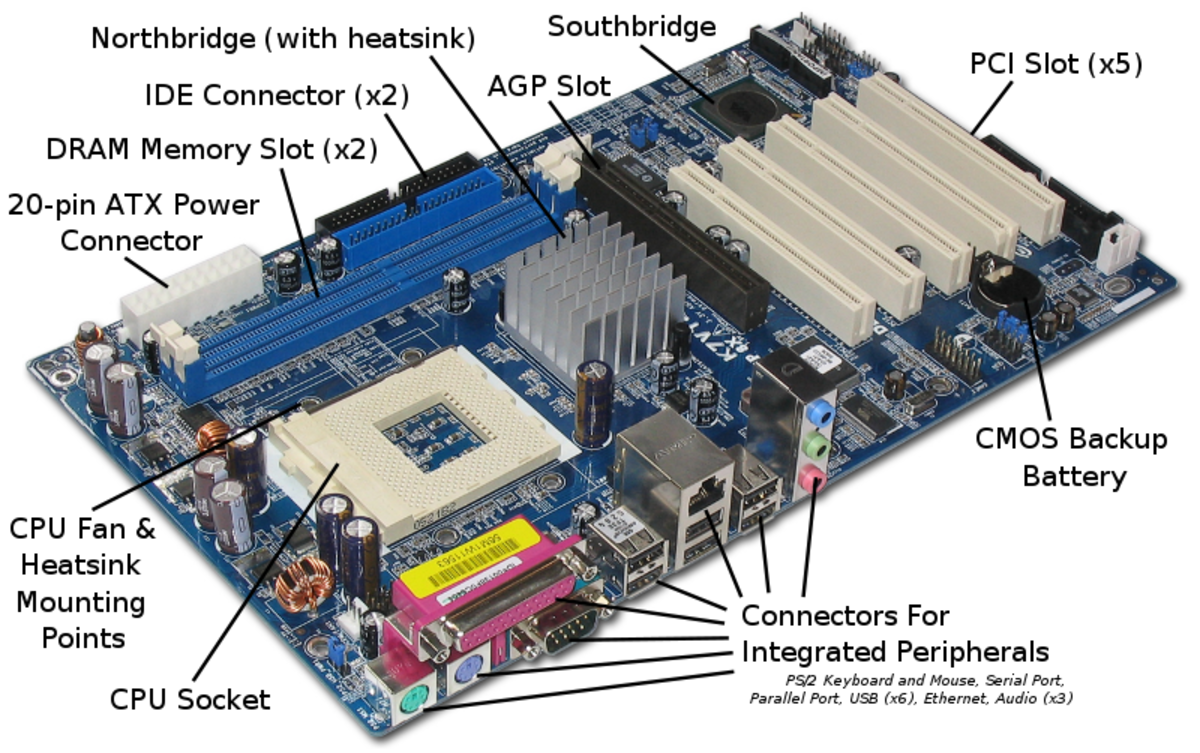
A labeled ASRock K7VT4A Pro Mainboard.
A labeled ASRock K7VT4A Pro Mainboard. | Source

Central Processing Unit (CPU)

Also known as the microprocessor or the processor, the CPU is the computer's brain. It is responsible for fetching, decoding, and executing program instructions as well as performing mathematical and logical calculations.
The processor chip is identified by the processor type and the manufacturer. This information is usually inscribed on the chip itself. For example, Intel 386, Advanced Micro Devices (AMD) 386, Cyrix 486, Pentium MMX, Intel Core 2Duo, or iCore7.
If the processor chip is not on the motherboard, you can identify the processor socket as socket 1 to Socket 8, LGA 775 among others. This can help you identify the processor that fits in the socket. For example, a 486DX processor fits into Socket 3.

Random Access Memory (RAM)

Random Access Memory, or RAM, usually refers to computer chips that temporarily store dynamic data to enhance computer performance while you are working.
In other words, it is the working place of your computer, where active programs and data are loaded so that any time time the processor requires them, it doesn't have to fetch them from the hard disk.
Random access memory is volatile, meaning it loses its contents once power is turned off. This is different from non-volatile memory, such as hard disks and flash memory, which do not require a power source to retain data.
When a computer shuts down properly, all data located in RAM is returned back to permanent storage on the hard drive or flash drive. At the next boot-up, RAM begins to fill with programs automatically loaded at startup, a process called booting. Later on, the user opens other files and programs that are still loaded in the memory.

Basic Input/Output System (BIOS)

BIOS stands for Basic Input/Output System. BIOS is a "read only" memory, which consists of low-level software that controls the system hardware and acts as an interface between the operating system and the hardware. Most people know the term BIOS by another name—device drivers, or just drivers. BIOS is essentially the link between the computer hardware and software in a system.
All motherboards include a small block of Read Only Memory (ROM) which is separate from the main system memory used for loading and running software. On PCs, the BIOS contains all the code required to control the keyboard, display screen, disk drives, serial communications, and a number of miscellaneous functions.
The system BIOS is a ROM chip on the motherboard used during the startup routine (boot process) to check out the system and prepare to run the hardware. The BIOS is stored on a ROM chip because ROM retains information even when no power is being supplied to the computer.

Complimentary Metal Oxide Semiconductor Random Access Memory (CMOS RAM)

A CMOS battery.
A CMOS battery.
Motherboards also include a small separate block of memory made from CMOS RAM chips which is kept alive by a battery (known as a CMOS battery) even when the PC’s power is off. This prevents reconfiguration when the PC is powered on.
CMOS devices require very little power to operate.
The CMOS RAM is used to store basic Information about the PC’s configuration for instance:-
  • Floppy disk and hard disk drive types
  • Information about CPU
  • RAM size
  • Date and time
  • Serial and parallel port information
  • Plug and Play information
  • Power Saving settings
Other Important data kept in CMOS memory is the time and date, which is updated by a Real Time Clock (RTC).

Cache Memory
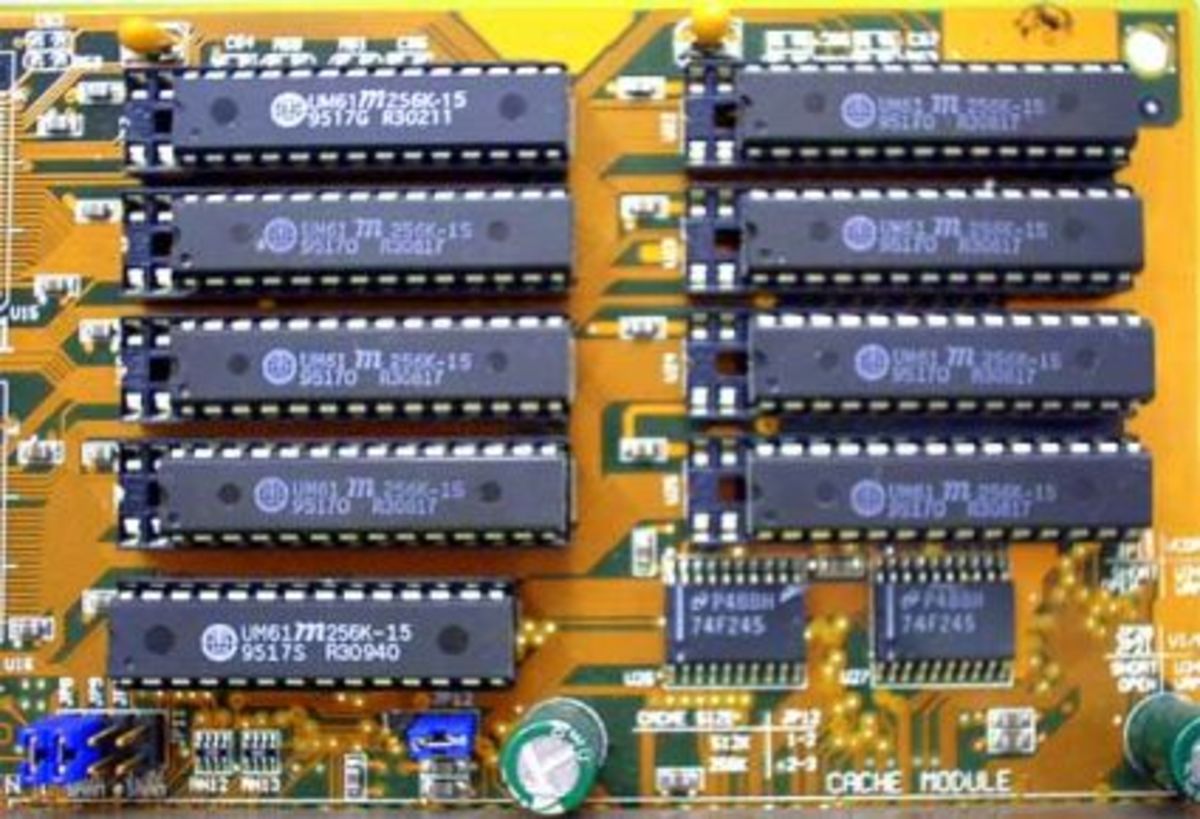
L2 cache on an old motherboard.
Cache memory is a small block of high-speed memory (RAM) that enhances PC performance by pre-loading information from the (relatively slow) main memory and passing it to the processor on demand.
Most CPUs have an internal cache memory (built into the processor) which is referred to as Level 1 or primary cache memory. This can be supplemented by external cache memory fitted on the motherboard. This is the Level 2 or secondary cache.
In modern computers, Levels 1 and 2 cache memory are built into the processor die. If a third cache is implemented outside the die, it is referred to as the Level 3 (L3) cache.

Expansion Bus

PCI slots.
PCI slots.
An expansion bus is an input/output pathway from the CPU to peripheral devices and it is typically made up of a series of slots on the motherboard. Expansion boards (cards) plug into the bus. PCI is the most common expansion bus in a PC and other hardware platforms. Buses carry signals such as data, memory addresses, power, and control signals from component to component. Other types of buses include ISA and EISA.
Expansion buses enhance the PCs capabilities by allowing users to add missing features in their computers by slotting adapter cards into expansion slots.

Chipsets

A chipset is a group of small circuits that coordinate the flow of data to and from a PC's key components. These key components include the CPU itself, the main memory, the secondary cache, and any devices situated on the buses. A chipset also controls data flow to and from hard disks and other devices connected to the IDE channels.
A computer has got two main chipsets:
  • The NorthBridge (also called the memory controller) is in charge of controlling transfers between the processor and the RAM, which is why it is located physically near the processor. It is sometimes called the GMCH, for Graphic and Memory Controller Hub.
  • The SouthBridge (also called the input/output controller or expansion controller) handles communications between slower peripheral devices. It is also called the ICH (I/O Controller Hub). The term "bridge" is generally used to designate a component which connects two buses.
Chipset manufacturers include SIS, VIA, ALI, and OPTI.

CPU Clock

The CPU clock synchronizes the operation of all parts of the PC and provides the basic timing signal for the CPU. Using a quartz crystal, the CPU clock breathes life into the microprocessor by feeding it a constant flow of pulses.
For example, a 200 MHz CPU receives 200 million pulses per second from the clock. A 2 GHz CPU gets two billion pulses per second. Similarly, in any communications device a clock may be used to synchronize the data pulses between sender and receiver.

A "real-time clock," also called the "system clock," keeps track of the time of day and makes this data available to the software. A "time-sharing clock" interrupts the CPU at regular intervals and allows the operating system to divide its time between active users and/or applications.

Switches and Jumpers

  • DIP (Dual In-line Package) switches are small electronic switches found on the circuit board that can be turned on or off just like a normal switch. They are very small and so are usually flipped with a pointed object, such as the tip of a screwdriver, a bent paper clip, or a pen top. Take care when cleaning near DIP switches, as some solvents may destroy them. Dip switches are obsolete and you will not find them in modern systems.
  • Jumper pins are small protruding pins on the motherboard. A jumper cap or bridge is used to connect or short a pair of jumper pins. When the bridge is connected to any two pins, via a shorting link, it completes the circuit and a certain configuration has been achieved.
  • Jumper caps are metal bridges that close an electrical circuit. Typically, a jumper consists of a plastic plug that fits over a pair of protruding pins. Jumpers are sometimes used to configure expansion boards. By placing a jumper plug over a different set of pins, you can change a board's parameters.
Source: http://hubpages.com/technology/the-motherboard-components

Wednesday, 25 May 2016

CHILD LABOR LAWS THEN AND NOW


The History of Child Labor

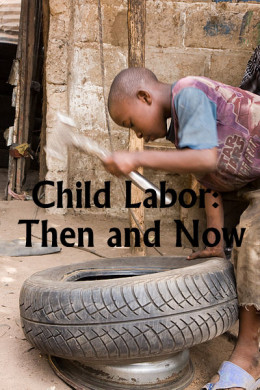
Child labor has existed throughout human history. For most of this time, child labor was an accepted fact - no one thought it was immoral or wrong, or that 'kids should be kids.' For thousands of years, children worked on family farms plowing fields, sewing seeds, tending animals, and helping with domestic chores. Children were held in indentured servitude and slavery, and served as apprentices, but public opinion did not really turn against the practice until the 19th century.
During the late 1700s and 1800s, child labor became increasingly harsh. As industry spread, many factory and mine owners sought child laborers because they could be paid lower wages, fit between (or inside) the machinery, and were less like to strike than their adult counterparts. Unsafe industrial working conditions caused frequent illness, injury, and even death for these child workers. The new, brutal face of industrialized child labor finally created an outcry and a 100-year battle to restrict child labor in the United States.
Today, child labor still exists in many of the world's nations. While many of these hold jobs that are not exploitative or harmful to their long-term health, far too many children do work harmful, exploitative jobs. Child labor is on the decline, worldwide, but the rate of decline has slowed in recent years and modern child labor is considered one of the 21st century's greatest human rights issues.

Child Labor in the 19th Century

In industrializing nations like the United States and Great Britain, child labor, and protests against it, grew during the 19th century. This upswing in child labor and protests occurred for three major reasons:
  • The number of child laborers increased.
  • Children increasingly held dangerous industrial jobs instead of family business or agricultural jobs.
  • Modern ideas about childhood began during the 19th century - young people were no longer seen as miniature adults, but as children who should attend school, play, and be sheltered from the 'evils' of the world.
In poor families, children were expected to contribute to the family budget. Their contributions were frequently small - a boy doing the job of an adult man might receive as little as 10% of an adult's wages. During the 19th century, children worked a variety of jobs, but were frequently employed in factories because they were small enough to fit on, in, or between the machines. Evidence indicates thatchildren as young as four sometimes worked in factories! Their small size also made them popular in coal mines because they could fit in tunnels too small for adults. Children who didn't work in factories frequently found employment selling cheap items, such as newspapers and matches.
Because of the demand for domestic servants, particularly in Victorian England, young children might be able to find work as a servant. While it wasn't always as day-to-day dangerous as working in a mine, being a domestic servant came with its own set of difficulties. Servants frequently had to work 80 hour weeks and were in constant danger of being sacked. Employers might actually set traps for their maids to check for honesty and thorough cleaning. For example, someone might hide a coin under a rug. If the maid cleaned the room and left the coin in place, she might get fired for not removing the rug to clean the room thoroughly. If she kept the coin, she would be fired for theft!

Children Working in a Mill

Children working in a mill in Macon, Georgia, US

19th Century Protests Against Child Labor

Protests against child labor in the 19th century began the slow process of child labor regulation. The following is not a complete list of every protest, proposal, and passage of a law, but it does highlight the major child labor milestones.
  • The first American child labor law was passed in 1836 in Massachusetts. This law stated that all children under the age of 15 who worked in factories had to attend school three months a year.
  • In 1842 Massachusetts passed a law limiting children to 10 hour work days. While some other states followed suit, these laws were infrequently enforced.
  • In 1876, labor unions began advocating that children under 14 be barred from working.
  • In 1883, the first major victory for child labor reform was won when Samuel Gompers and the New York labor movement successfully sponsored a piece of legislation banning cigar making in tenements. Previously, thousands of children had been employed in the cigar-making industry.

The 20th Century and Child Labor

During the 20th century, real progress against child labor was finally made in the United States. After several false starts, failed Constitutional amendments, and laws that were declared unconstitutional, in 1938, the Fair Labor Standards Act set a federal minimum working age and restrictions on the number of hours children could work.

American Child Labor Laws Today

In the United States today, these are the basic federal child labor laws:
  • Generally, children under 12 may not be employed, unless they work for their parents, deliver newspapers, have certain agricultural jobs, or are child actors.
  • Children between the ages of 12 and 16 may be employed in safe occupations, as long as they work during approved (non-school) hours and work a limited schedule.
  • Children between 16 and 18 may work unlimited hours in non-hazardous occupations.
These laws are designed to ensure children can complete their education and only work in non-threatening, non-exploitative environments. Individual states may have their own, more stringent, child labor laws.

Child Labor in the 21st Century

Exploitative, hazardous child labor is still a realty in many nations today. Child labor is poorly documented, so the exact number of child laborers is hard to determine. UNICEF estimates that about 150 million children between the ages of 4 and 16 work and the International Labor Organization estimates that about 215 million children under the age of 18 work, many of them full time. For children between the ages of 5 and 17:
  • 1 in 4 living in sub-Saharan Africa work.
  • 1 in 8 living in Asia Pacific work.
  • 1 in 10 living in Latin America work.
While child labor rates peaked in the early 20th century, the rate of decline has slowed in recent years. In spite of global reduction in child labor, child labor in sub-Saharan Africa has actually increased in recent years.
Not all child labor is exploitative or dangerous. However, all child labor does have the potential to interfere with a child's education and hamper his/her physical and mental development. Additionally, child labor creates a cycle of poverty. Under-educated child laborers cannot find decent jobs as adults, so their children are forced to work, as well, feeding an inter generational cycle.

Stopping Modern Child Labor

Child labor is an international problem with far-reaching consequences. A problem of this magnitude cannot be solved by any one nation or corporation, no matter how large or powerful it may be.
If you want to join the fight against child labor, I urge to to visit UNICEF's websiteor the Global March Against Child Labour to learn about child labor and exploitation and how they lead to poverty. Also, check out the Sweatshop Hall of Fame to learn which major brands and companies use child labor - you may be surprised!
Source: http://hubpages.com/business/Child-Labor-Laws-Then-and-Now

BEST WAY TO LOSE BELLY FAT FAST

Best way to lose weight – 16 Steps to Success

Tired of the belly bulge? Want to learn how to lose belly fat or how to get a six pack? Try these 16 fat busting foods and discover the best way to finally lose belly fat for good. While losing belly fat will take a lot more than just adding a few foods to your diet, there are things you can eat that will help you trim down as quickly as possible.
Whether you are trying to lose weight or are looking for the best way to get back in shape, these belly blasting weight loss tips will get you off to a great start and keep you going over the long haul.

Lose Belly Fat Fast!

How to Lose Belly Fat

Best Way to Lose Belly Fat
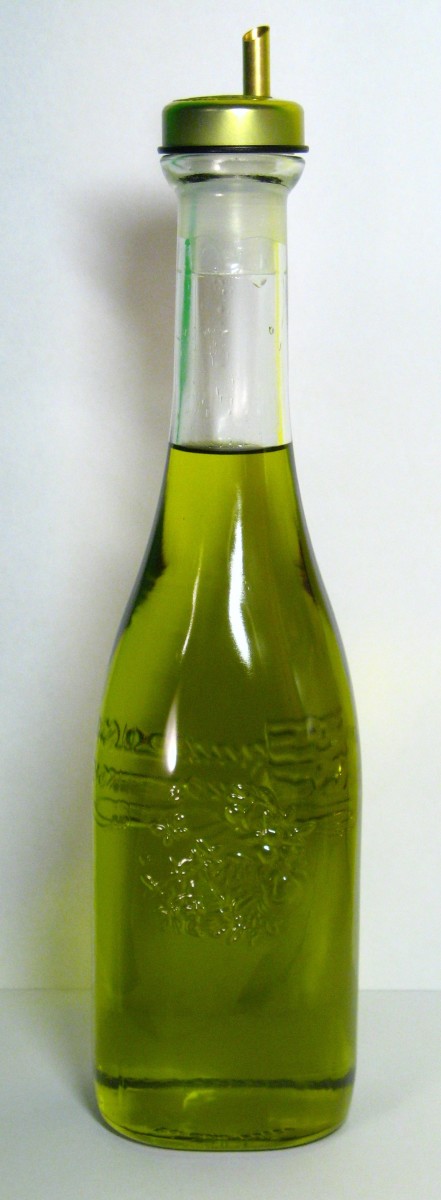
Italian Olive Oil Wikimedia Commons
There are many different weight loss programs and diets available that can teach you how to lose belly fat and get into great physical condition, but it is important to understand the effects that certain foods can have on weight loss success or failure. For example, high fructose corn syrup, which is common in many prepared or convenience food items has been shown to actually promote the retention of belly fat. Understanding our body's reaction to these foods is the basis of many successful programs aimed at developing the fastest weight loss strategies. In fact, with the right types of foods it is even possible to get rid of cellulite or at least minimize its effects. This relationship between food and the body is often referred to as metabolic typing and is worth looking into.

Oatmeal –

Your mid morning hunger attack is caused by a drop in blood sugar levels. Oatmeal is rich in soluble fiber and gives you a sense of fullness and satiety. It also stays in your stomach for hours and will help stave off your morning donut run. Whole grains have also been shown to be an excellent way to lose weight fast because they can actually promote fat burning.
Tip: Avoid the flavored varieties that are loaded with extra sugar. Choose plain steel-cut or rolled oats and use stevia or berries to sweeten.

Berries –

Berries have a lot of filling fiber packed into them. Raspberries have six grams of fiber in a single cup.
Tip: Jelly is not a fruit; it’s the junk food of the fruit food group. It’s loaded with sugar and contains almost no fiber.

Olive Oil –

Fat controls hunger and is vital to proper nutrition. Stick with monounsaturated fats like canola or olive oil, they will help control cholesterol and satisfy cravings.
Tip: Avoid hydrogenated vegetable oils; they’re loaded with trans fats.

Protein Powder –

Protein powder contains important amino acids that help build muscle and burn fat. For a delicious, fat-burning drink, add two teaspoons of protein powder to your smoothie. Protein powder is usually available at most health food stores.
Tip: Watch what you put in your smoothie. Adding protein powder won’t transform an unhealthy smoothie. Use fresh fruit, low-fat milk, and yogurt.
Source: http://hubpages.com/health/bestwaytolosebellyfatfast

Tuesday, 24 May 2016

WORLD’S IMPORTANT DAYS

World’s Concern and Interest

World’s Important Days are actually not holidays. But to the International community and United Nations, World’s Important Days may be treated as favorite holidays for they have something to commemorate, promote or mobilize. World’s Important Days or International Days are days to observe issue of world’s concern and interest. These international days are really days used by the world community to commemorate, promote and mobilize for certain action.

United Nations

Worlds Important Days - Most of the worlds important days have been established by the United Nations (UN). Image Credit: Wikimedia CommonsMany of the world’s important days have been established by the United Nations (UN). The United Nations has a rich infrastructure throughout the world and it’s through such infrastructure that is able to coordinate events of these international days. In most of these world’s important days, the UN has successfully put in motion campaigns in international observance of the days and in return has always come up with recommendation for future days.


Here below is a listing of world’s important days:

January - World's Important Days

Day
Day's Name
January 1 
Global Family Day 
January 6 
World Day - War Orphans 
January 24
National Girl Child Day of India January 24
January 26
International Customs day
January 27
International Holocaust Remembrance Day
January 28
Data Protection Day
January 30
World Leprosy Eradication Day
World’s Important Days - International Days - and Observance Days for the month of January

February - World's Important Days

Day 
Day's Name 
February 2
World Wetland Day
February 4
World Cancer Day
February 5
Kashmir Day
February 6
International Day against Female Genital Mutilation
February 12
Darwin Day
February 12
World Day of the Sick
February 14
Valentine’s Day
February 20
World Day of Social Justice
February 21
International Mother Language Day
February 22 
World Scout Day 
February 23 
World Peaces and Understanding Day 
World’s Important Days - International Days - and Observance Days for the Month of February

March - World’s Important Days

Day 
Day's Name 
March 4
World Day of the Fight Against Sexual Exploitation
March 8
International Women's Day
March 13
World Kidney Day
March 13
World Rotaract Day
March 15
World Consumer Rights Day
March 20
International Day of the Francophonie
March 20
World Day of Theatre for Children and Young People
March 21
World Sleep Day
March 21
World Forestry Day
March 21
International Day for the Elimination of Racial Discrimination.
March 22
World Water Day
March 23
World Meteorological Day
March 24
World TB Day
March 24
International Day for Achievers
March 25
International Day of Remembrance - Victims of Slavery and Transatlantic Slave Trade
March 27
World Drama Day
World’s Important Days - International Days - and Observance Days for the Month of March

April - World’s Important Days

Day
Day's Name
April 2
World Autism Awareness Day
April 4
International Day for Mine Awareness and Assistance in Mine Action
April 7
World Health Day
April 7
International Day of Reflection on the Genocide in Rwanda
April 12
World Aviation & Cosmonautics Day
April 17
World Haemophilia Day
April 18
World Heritage Day
April 21
World Creativity and Innovation Day
April 22
Earth Day
April 23
World Book and Copyright Day
April 24
World Lab Animals Day
April 25
World Malaria Day
April 26
World Intellectual Property Day
April 28
International Worker’s Memorial Day
April 29
World Dance Day
World’s Important Days - International Days - and Observance Days for the Month of April

May - World’s Important Days

Day
Day's Name
May 01
May day - Labour Day
May-03
Press Freedom Day
May-03
International Sun Day
May-03
World Asthma Day
May-04
Coal Miners Day
May-04
International Firefighters' Day
May 05 - First Sunday in May
World laughter Day - First Sunday in May
May-05
World Athletics Day
May-08
World Red Cross Day and Red Crescent Day
May-08
Remembrance and Reconciliation for Lost Lives Second World War
May-09
World Thalassaemia Day
May-10
World Mother Day
May-12
International Nurses Day
May-13
International Criminal Court Day
May-14
Bone and Joint Day
May-15
International Day of the Families
May-17
World Information Society Day
May-18
World Hyper Tension Day
May-18
World Museum Day
May-19
World Hepatitis Day
May-20
World Metrology Day
May-21
World Day for Cultural Diversity for Dialogue and Development
May-22
International Day for Biological Diversity
May-23
World Turtle Day
May-24
Commonwealth Day
May-28
Anti-Narcotics Day
May-28
Engineers Day
May-29
International Day of United Nations Peacekeepers
May-31
World Anti Tobacco Day
World’s Important Days - International Days - and Observance Days for the Month of May

June - World’s Important Days

Day
Day's Name
June 1
International Children’s Day
June 4
International Day of Innocent Children Victims of Aggression
June 5
World Environment Day
June 8
World Brain Tumors Day
June 8
World Ocean Day
June 12
World Day Against Child Labor
June 14
World Blood Donor Day
June 15
World Father’s Day
June 16
International Integration Day
June 17
World Combat Day to Desertification and Drought
June 18
International Picnic Day
June 20
World Refugee Day
June 21
World Music Day
June 23
International Olympic Day
June 23
United Nations Public Service Day
June 26
International Day against Drug abuse and Illicit Trafficking
June 26
International Day in Support of Victims of Torture
World’s Important Days - International Days - and Observance Days for the Month of June

July - World’s Important Days

Day
Day's Name
July 1
International Joke Day
July 1
Doctor's Day
July 2
World Sports Journalists Day
1st Saturday of July
International Day of Cooperatives
July 6
World Zoonoses Day
July 11
World Population Day
July 28
World Nature Conservation Day
World’s Important Days - International Days - and Observance Days for the Month of July

August - World’s Important Days

Day
Day's Name
August 1
World Breast-feeding Week
August 3
Friendship Day
August 6
Anti Nuclear Day
August 6
Hiroshima Day
August 9
Nagasaki Day
August 9
International Day of the World’s Indigenous People
August 12
International Youth Day
August 13
World Left Hander's Day
August 15
International Mourning Day
August 19
World Humanitarian Day
August 19
World Photography Day
August 20
World Mosquito Day
August 23
International Day for the Remembrance of the Slave Trade and Its Abolition
August 26
Namibia Day
World’s Important Days - International Days - and Observance Days for the Month of August

September - World’s Important Days

Day
Day's Name
September 2
Coconut Day
September 8
World Literacy Day
September 10
World Anti-Suicide Day
September 11
World First Aid Day
September 15
International Day of Democracy
September 15
International Day of Engineers
September 16
World Ozone Day
September 19
International Talk Like a Pirate Day
September 21
World Peace Day
September 21
World Alzheimer's Day
September 22
World Car Free Day
September 22
World Rose Day - Welfare of Cancer Patients
September 22
Car Free Day
September 24
World Heart Day
September 24
World Clean-up Day
September 25
International Grab Hand Day
September 26
Day of the Deaf
September 26
European Day of Languages
September 27
World Tourism Day
September 28
Right to Know Day
September 28
World Rabies Day
Last week of September
World Maritime Day
World’s Important Days - International Days - and Observance Days for the month of September

October - World’s Important Days

Day
Day's Name
October 1
World Vegetarian Day
October 1
International Day of the Elderly
October 1
World Hepatitis Day
October 2
World Animal Day
October 2
World Ostony Day
October 2
International Day of Non-Violence
October 3
World Habitat Day
October 4
World Animal Welfare Day
October 5
World and International Teacher’s Day
October 6 (or second Saturday of October)
World Hospice and Palliative Care Day
October 8
World Humanitarian Action Day
October 9
World Postal Day
October 10
World Mental Health Day
October 12
World Sight Day
October 12
World Arthritis Day
October 13
International Day for Natural Disaster Reduction
October 14
World Standards Day
October 15
Global Hand Washing Day
October 15
World White Cane Day-guiding the Blind
October 15
International Day of Rural Women
October 16
World Food Day
October 16
World Anaesthesiologists Day
October 17
World Trauma Day
October 20
World Osteoporosis Day
October 24
UN Day
October 24
World Development Information Day
October 24
World Polio Day
October 30
World Thrift Day
World’s Important Days - International Days - and Observance Days for the Monther of October

November - World’s Important Days

Day
Day's Name
November 1
World Vegan Day
November 5
World Interact Day
November 6
International Day for Preventing the Exploitation of the Environment in War and Armed Conflict
November 8
World Radiographer Day
November 9
World Freedom Day
November 14
World Diabetes Day
November 16
International Day for Tolerence
November 17
International Students Day
November 19
World Toilet Day
November 19
International Men's Day
November 20
Universal Children’s Day
November 20
Africa Industrialization Day
November 21
World Fisheries Day
November 21
World Hello Day
November 21
World Television Day
November 25
International Day for the Elimination of Violence Against Women
November 25
International Meatless
November 29
International Day of Solidarity with Palestinian People
Third Sunday of November
World Day of Remembrance for Road Traffic Victims
World’s Important Days - International Days - and Observance Days for the Month of november

December - World’s Important Days

Day
Day's Name
December 1
World AIDS Day
December 2
World Computer Literacy Day
December 2
International Day for the Abolition of Slavery
December 3
International Day of People with Disability
December 3
World Conservation Day
December 5
International Volunteer Day for Economic and Social Development
December 7
International Civil Aviation Day
December 9
The International Day Against Corruption
December 10
International Day of Broadcasting
December 10
Human Rights Day
December 11
International Mountain Day
December 14
World Energy Day
December 18
International Migrants Day
December 20
International Human Solidarity Day
December 29
International Biodiversity Day
World’s Important Days - International Days - and Observance Days for the Month of December

Source: http://hubpages.com/holidays/Worlds-Important-Days-International-Days-and-Observance-Days