menus

slider

Monday, 13 June 2016

IAS OFFICER: 2016 SALARY, PERKS, AND OTHER FACILITIES

IAS vs. Private Sector Salary

Working for IAS (Indian Administrative Services) is not only the most well-known government job, it is also one of the most prestigious jobs in India. Many Indian job seekers wonder how much an IAS employee makes since some believe the salary is lower than private sector jobs. As a result, many bright students don’t want to join government service.
The reality is that after the 6th pay commission, the IAS salary is quite good. When you add to it the many perks you get as an IAS officer, the result is comparable to private-sector jobs. In addition, IAS is not just about the salary and it's more than just a job for making money. It’s also about serving the nation and its billions of people.
In this article, I’m going to discuss the salary and facilities of an IAS officer.

IAS Grades and Pay Scales

In government services in India, the pay scale is not the total salary. It only indicates the minimum and maximum base pay of an employee, which is supplemented with grade pay, D.A., and other perks. The IAS are promoted to pay scales according to service seniority.
These scales are:
  • Junior Scale
  • Senior Time Scale
  • Junior Administrative Grade
  • Selection Grade
  • Super Time Scale
  • Above Super Time Scale
  • Apex Scale
  • Cabinet Secretary Grade

Summary of Pay Scales, Salary Ranges, and Grade Pay

Grade
Pay Scale
Grade Pay
Years of Service Required
Post
Junior or Lower Time Scale
15,600 - 39,100
5,400
n/a
Sub-Divisional Magistrate (SDM), SDO, or Sub-Collector (after 2 years probation)
Senior Time Scale
15,600 - 39,100
6,600
5
District Magistrate (DM) or Collector or a Joint Secretary of a Government Ministry
Junior Administrative
15,600 - 39,100
7,600
9
Special Secretary or the Head of Various Government Departments
Selection Grade
37,400 - 67,000
8,700
12 - 15
Secretary to a Ministry
Super Time Scale
37,400 - 67,000
8,700
17 - 20
Principal Secretary of a Very Important Department of the Government
Above Super Time Scale
37,400 - 67,000
12,000
(varies)
(varies)
Apex Scale
80,000 (fixed)
--
(varies)
Chief Secretary of States, Union Secretaries in charge of various ministries of Government of India
Cabinet Secretary Grade
90,000 (fixed)
--
(varies)
Cabinet Secretary of India
Keep in mind that this information can change and varies based on location and position. Currency is Indian rupees.

Junior or Lower Time Scale

Summary:
  • Pay Band: Rs 15,600 - 39,100
  • Grade Pay: Rs 5,400 (compensates for training and learning)
  • Post: Sub-Divisional Magistrate or Sub-Collector (SDM or SDO) in a subdivision of a district
In Junior Scale, the new recruit joins at Pay Band 3, which is Rs: 15,600 – 39,100.
He also gets a Grade Pay of Rs 5,400 to compensate for training and learning. After that, the new recruit is placed in a probation period for two years after which he is posted as an SDM (Sub-Divisional Magistrate), also known as SDO or Sub-Collector.

Senior Time Scale

Summary:
  • Years of Service Required to Reach Level: 5
  • Pay Band: Rs 15,600 - 39,100
  • Grade Pay: Rs 6,600
  • Post: District Magistrate (DM) or Collector or a Joint Secretary of a Government Ministry
After at least 5 years of service, the IAS employee is promoted to Senior Time Scale at the pay band of 15,600 - 39,100 with a grade pay of Rs 6,600. At that time, he may be posted as a District Magistrate (DM) or Collector or a Joint Secretary of a Government ministry.

Junior Administrative Grade

Summary:
  • Years of Service Required to Reach Level: 9
  • Pay Band: Rs 15,600 - 39,100
  • Grade Pay: Rs 7,600
  • Post: Special secretary or head of various government departments
The IAS is promoted to this scale after nine years of service and could get the post of special secretary or the head of various government departments.

Selection Grade

Summary:
  • Years of Service Required to Reach Level: 12-15
  • Pay Band: Rs 37,400 - 67,000
  • Grade Pay: Rs 8,700
  • Post: Secretary of a ministry
To reach this grade, you need to contribute a minimum of 12 - 15 years in the service. The post for Selection Grade is that of the secretary to a ministry.

Super Time Scale

Summary:
  • Years of Service Required to Reach Level: 17 - 20
  • Pay Band: Rs 37,400 - 67,000
  • Grade Pay: Rs 8,700
  • Post: Principal secretary of a very important department of the government
After completing a minimum 17 to 20 years of service, the officer reaches the Super Time Scale salary and he becomes Principal Secretary of a very important department of the government.

Above Super Timescale

Summary:
  • Years of Service Required to Reach Level: (varies)
  • Pay Band: Rs 37,400 - 67,000
  • Grade Pay: Rs 12,000
  • Post: (varies)
A limited number of bright individuals are selected for Above Super Time Scales.

Apex Scale

Summary:
  • Years of Service Required to Reach Level: (varies)
  • Pay Band: Rs 80,000 (fixed)
  • Grade Pay: n/a
  • Post: Chief Secretary of States, Union Secretaries in charge of various ministries of Government of India
The highest base salary is Rs 80,000 (fixed) for an IAS.

Cabinet Secretary Grade

Summary:
  • Years of Service Required to Reach Level: (varies)
  • Pay Band: Rs 90,000 (fixed)
  • Grade Pay: n/a
  • Post: Cabinet Secretary of India
Only the central Cabinet Secretary is given the base salary of Rs 90,000 (fixed).

Total Starting Salary and Maximum Salary of IAS

IAS Level
Basic Pay
D.A. (at 125%) 2016
Total Salary
New Recruit
21000 (increases 3% per year)
26250 (increases 10-14% per year)
47250
Level at Maximum Pay
90,000 (fixed)
112500(could increase)
202500

What Is the Total Starting Salary of an IAS ?

Now, I know you shall want to know how much total money officers get after joining the service, since it is difficult to understand the jargon of pay band, grade scale, and other government terms.
Keep in mind that total pay can change with time. At the moment, the total payment of an IAS recruit can be roughly estimated as below: (Updated in April 2016)
  • Basic Pay: Rs 21,000
  • D.A. (at 125%): Rs 24,990
  • Total: Rs 47,225 (updated according to the latest central D.A.)
This is the average salary of an IAS officer in India at the beginning of his career.
The base pay will increase at a rate of 3% per annum and you can expect a D.A. increase of an average of 10% to 14% per year. As such, an IAS officer can hope to double his salary every seven to nine years.

The Maximum Salary of an IAS Officer

Of all IAS, the Cabinet Secretary gets the highest salary. He has a fixed base pay of Rs 90,000. Since it is fixed, he does not get any further raises.
His estimated salary is as follows:
  • Base Pay: Rs 90,000
  • D.A.: Rs 1,12,500
  • Total: Rs 2,02,500
This salary may increase with an increase of D.A.

IAS Officer: Salary and Perks

If you compare this job with a top job in the private sector, you'll discover it has comparatively nice facilities and perks.
  • Officers are often given superb accommodation for very low rent, usually a big bungalow with its own security guards, gardeners, servants, and cooks.
  • An IAS officer gets government cars, usually with red lights.
  • Officers receive free electricity and telephone.
  • During official travel for duty, IAS officers get accommodation in very good government bungalows and rest houses.
  • Power and prestige is obviously one of the greatest perks for an IAS officer.
  • IAS positions are much more secure than private sector jobs. In fact, it is very, very tough even for a chief minister to terminate an IAS officer’s job since they are protected by legal safeguards.
  • IAS officers can apply for a study leave for 2 to 4 years in a reputable foreign university, the cost of which will be paid by the government.
  • Officers get lifetime pensions and other retirement benefits.
There are many more facilities and perks which are impossible for a private sector employee to get.
Moreover, an IAS officer is behind the formation and implementation of the policies of the central and various state governments. The work you do is for the good of the people, which is the greatest perk of all.
Source: http://hubpages.com/business/ias-officer-salary-and-facilities

BACK PAIN CAUSES AND TREATMENTS

Pain Between the Shoulder Blades: Should I Worry?

Many who experience upper back pain (between the shoulder blades) think that they’re suffering from a common, harmless problem. They might think that they just slept in the wrong position or they’ve just been working out too much, that the problem is merely muscular and will heal itself. Even though it is possible that this pain stems from bad posture and/or excessive movement, there’s also a chance that it's a sign of a life-threatening disease so, instead of dismissing the pain, it’s much wiser to spend a little time doing research.
The pain in your upper back might be just a strained muscle, but it might be something more. Below, you'll find many other common causes for back pain between the shoulder blades.

Upper Back Pain: A Spinal Dilemma

Upper back pain between shoulder blades can be due to a number of possible issues. Although in most cases, muscular irritation is the culprit. Depending on the symptoms of the pain between shoulder blades, however, it can be the effect of something more serious; particularly, pain in the upper back could be related to spinal issues.
These cases, however, are very rare. Three major parts form the spine; the cervical spine or the neck, the thoracic spine which holds the middle-back portion of the body, and lastly, the lumbar spine which is located from the waist down. Most of the upper body's mobility is focused on the cervical and lumbar spine -- they can be moved from left to right, and angled to the front and to the back. Motion in the thoracic spine, on the other hand, is limited. Because this part of the spine holds the most vital organs of the body, its main function is to shield and protect. Restricted mobility happens to be a great advantage because this prevents injury and degeneration.
When problems do occur, however, you may encounter one of the following medical conditions:
Swollen facet joints can produce aches in the upper back. The spine’s flexibility is provided by these joints: in other words, they’re necessary to carry out many kinds of movement (turns and bends are just a few examples). As with any other part of the body, facet joints aren’t invincible. If used far too hard or too often, they end up damaged and swollen and of course, swelling leads to soreness.
How do facet joints get swollen? It all begins in the gaps of the vertebra. These gaps are occupied by cartilages, which is lubricated by synovial fluid to protect it from wear and tear.
Now, imagine a crunchy toast sandwich with a layer of really thick cheese in the middle. Think of the toasts as the vertebra, and the cheese as the intervertebral discs (composed of the cartilage and synovial fluid). When the sandwich is pressed on one side, the cheese will prevent the toasts from touching each other. The same happens when the spine angles and curves.
Due to a number of possible reasons like ageing, injury, and too much pressure, the intervertebral discs lose its thickness and springiness, narrowing the gap between the vertebrae and facet joints. If you repeat the process of pressing the sandwich on one side, the toasts will touch and grind against each other. Imagine the corners of the crunchy slices as the spine's facet joints, with the bits falling from the abrasion. Just the mere thought of it sends pain between shoulder blades.
The pressure and scraping will then develop what's called bone spurs. These are source of the swelling, and it can grow larger, and of course, more painful, if left unattended.
The same thing happens in other joints. In fact, this kind of condition is more common on the knees being the most mobile part of the body, and one that carries the most weight. This is generally known as arthritis. If the swelling happens on your spine, on the other hand, it is more accurately called as osteoarthritis.
If this sounded bad enough, however, the next medical issue will seem like a nightmare. Interestingly, although many professionals view this second condition as separate from the first, this can actually be the result or the effect of a swollen facet joint.
A herniated disc is another problem that can prove to be extremely painful. Spinal discs are rubbery pads between the vertebrae in the spinal column that work like shock absorbers. In childhood, the discs are gel-filled, but they begin to solidify as we get older. By middle age, the disks become as inflexible as hard rubber and more prone to injury. With injury or stress, a disc's inner material may swell outward, pushing through the outer shell, pressing against surrounding nerves, and rendering that area more prone to injury.
Swollen joints and herniated disks cause pain. However, the pain caused by the latter tends to spread discomfort along the arms as well and may be accompanied by numbness.
Depending on where along the spine a herniated disc occurs, different symptoms and numbness will be felt.
Should the affected intervertebral disc be somewhere in the lumbar region, the nerves connecting the spine to the lower body will be pressed and pressured by the leaking or swelling. This, in turn, will cause the numbness, tingling, or pain on the legs.
On the other hand, should this condition happen along the cervical region, pain and numbness will crawl from the shoulders down to the arms. In worse cases, the patient will show neurological symptoms.
When it comes to thoracic herniated discs, however, there will be upper back pain between shoulder blades, which can radiate to the upper chest and belly. Luckily, this herniation is rare because of the thoracic spine's restricted mobility.
The last and worst is the herniation towards the spinal cord. When this vital part of the spine is pressed, it causes myelopoathy or spinal dysfunction. Should this form of herniation be at its worst, the patient's entire lower body will not function entirely. Milder effects include loss of balance, weakness in the lower extremities, and bladder control loss.

Sharp Pain in Back: A Bile Problem?

The human body moves in mysterious ways, especially to non-experts. When back pain between shoulder blades isexperienced, it's only logical to assume the problem is within the area. There are instances, however, when the issue is rooted deeper within the body. And unexpectedly, it involves the flow of bile.
Biliary colic is another medical issue that might cause back pain and shouldn't be taken lightly. This is a type of pain that occurs when a gallstone blocks a bile duct and causes a sharp upper back or rib pain that radiates to the right shoulder. It may manifest after ingesting a fatty meal in an episode of sharp, intense soreness that starts near the abdomen and branches out to the upper-back region and may be accompanied by nausea and vomiting.
Bile liquid is made in the liver then stored in the gallbladder. It's primary purpose is to digest and break down fats entering the body. Therefore, food enters the body, bile will automatically travel from the gallbladder via the cystic duct to the small intestine to continue the food's digestion.
This simple process can be interrupted by gallstones. These small but highly irritating nuisances block the cystic duct, making it difficult, if not impossible, for the bile to pass through. The body will respond to this problem by continuously contracting the muscles cells of the duct to remove the gallstone. This vigorous contraction causes the pain between shoulder blades. Other conditions, however, may cause biliary colic, such as tumors and strictures along the bile duct.

Back Pain: What to Do

Initially, you need to make sure your back pain between shoulder blades is not caused by simple conditions like muscle strains due to poor standing and sitting positions, faulty executions of physical activities, and excessive weightlifting. Of course, other causes include ageing and constricted ligaments. These issues can be alleviated by simple massages or a change of habits. If it persists, however, then it may be time to consider the above mentioned and more serious conditions as the main problem.
Upon becoming aware of facet joint issues, spinal disc troubles, and bile-related problems, you may be wondering whether there’s a guide to how to distinguish these three from one another. You may also want to know if there’s a simple what-to-do guide to follow when you feel pain.
There’s no need to worry about finding those things since they’re all here. Use this list to help you determine your source of pain and course of action:
Is it a brief, mild ache? If so, this could indicate mere muscle strain, but it might also be either swollen facet joints or herniated discs. Experiencing this kind of soreness is a nuisance at best. Doing all sorts of chores and completing all kinds of office work should still be possible, but even the mildest pains could turn into more serious issues if proper actions aren’t taken. That’s why these steps are important to remember:
  • Rest for a while and see whether the pain subsides.
  • If the aching stops, consider these suggestions:
  • Do some stretches before engaging in any more physical activity. This may seem ridiculous for some, because the thought of moving their aching backs will only cause more discomfort, thus preventing them from performing their tasks. Understand, however, that the spine along with the ligaments and muscles around it are designed to move. Keeping it idle will only prolong the back pain. What's needed to be done is to warm the body up before doing anything extensive, and slow and simple stretches will do the trick:
    • Back Flexion Exercise. With your back laying flat on a yoga mat, or anything that will prevent you from touching the cold floor, slowly pull your knees to the chest, as you flex your head forward at the same time. There’s no need to force yourself into this balled-up position. Keeping a comfortable stretch is more important. Go back to your starting position in a slow release of the stretch.
    • Knee to Chest Stretch. Again, lie on the floor. Bend your knee while keeping the heels rooted. Hold the back of one knee with both hands, then slowly bring it toward the chest. As previously stated, it’s more important to keep the stretch comfortable. There’s no need to push yourself to complete the extent of the exercise.
  • Consider exercising (opt for routines that benefit the upper back). If lifting heavy objects is a regular part of your day, then keeping a strong back is essential, and there’s no other way to build it but through regular exercise. Not only will this relieve pain between shoulder blades but also prevent it from coming back. There are several back strengthening calisthenics, and these can be classified to the three major parts of the back; upper, mid, and lower back.
    • Upper Back Exercises: Push-ups, and dips -- this will benefit your arms more, but it will also indirectly strengthen your shoulders and the muscles between.
    • Mid-back Exercises. Pull-ups and chin-ups -- basically, all the mentioned exercises will benefit the back, what made these two special is how they build the lateral muscles.
    • Lower-back Exercises. Sit-ups, lying leg raises, pilates bridge, floor hyper extensions, and back hyper extensions.
  • Don't move suddenly and quickly to avoid additional strain.
  • Exert effort to correct common posture problems. There’s no other way to achieve this than by being mindful of your posture. If you don't know what a correct posture is, put a book on your head and avoid it from falling off when you stand and walk. A perfectly straight back and angled head will prevent it from sliding off, thus if it still does, you need to keep working on your posture.
  • Follow the above suggestions for two weeks to a month and observe if the pain between shoulder blades subsides. If your problem is a simple muscle strain, your back's condition would have greatly improved. Otherwise, continuous observation should be made, and the following additional questions should be considered.
Would you describe the pain as long and moderate? If so, this could indicate the presence of either one of the two issues previously mentioned, swollen facet joints or herniated discs. In this case though, medical attention might be necessary. Moderate pain that stays for half an hour (or more) sometimes means that the ache-causing concern has worsened. If the pain gets worse, doctors will have to use certain imaging technologies (such as X-Ray for facet joints and MRI for herniated discs) to determine the extent of the damage.
Is the pain intense and accompanied by numbness? If the episodes of soreness are almost unbearable and there are instances in which certain parts of your body feel numb (or in some cases, tingling), then it’s definitely time to pay a visit to your physician. Together, such symptoms are considered a telltale sign of serious spinal disc dilemmas. If left unchecked, a severely herniated disc could even cause paralysis or permanent nerve damage.
Is your noticeable pain accompanied by nausea? Periods of upper back pain between the shoulder blades that are accompanied by nausea are indicative of biliary colic. In fact, some medical experts suggest that it’s best to immediately call for an ambulance if this combination of symptoms manifest. Also, those who’ve been suffering from aches after they’ve eaten (another warning sign) should really be wary of these simultaneous symptoms.

Solutions and Treatments for Pain Between the Shoulders

So clearly, upper back pain (between the shoulder blades) may be just muscle strain, but it may also be linked to several health problems, medical issues which aren’t equally dangerous–some causing only temporary discomfort while others that might prove to be fatal if left untreated. Well, each of these issues is also solved (or at the very least, managed) in different ways, as well.
  • Swollen Facet Joints. As discussed above, the mildest joint troubles could be prevented from becoming worse through fairly simple techniques, such as maintaining proper posture and avoiding sudden movement. If more severe, the condition might require the aid of a physical therapist to help with strength and flexibility. Individuals suffering from more serious cases of facet joint concerns are given these options:
    • To undergo a procedure called "nerve blocking" so that the soreness would immediately subside. People wondering what’s done during the procedure would most likely end up shocked after realizing that steroid injections are involved.
    • If surgery is not a preferred method, a number of other treatments can still be opted for by patients.
      • Proper exercise -- This, of course, should be according to a physical therapist’s instructions. The results from this method will, however, take longer to surface. Pain between shoulder blades will remain for a couple of weeks, but if the patient is mindful enough of his body, he will notice the slight decrease of aches after every session.
      • Warm or presses (heat wraps and cold pad applications, for example) –This can alleviate episodes pain.
      • Alteration of daily activities– You need to reduce physically exhausting routines like long commutes, or increase times of rest breaks.
    • To take painkillers and muscle relaxants on a regular basis. While minor cases of the spinal problem can be effectively handled using over-the-counter medication, the condition’s more alarming variants require powerful prescription drugs.
  • Herniated Discs. Treatments for this medical issue are similar to the ones developed for swollen facet joints. Doing spine-enhancing exercises and being mindful of the body’s position are more than enough to solve the concerns faced by people with minor disk hernia. Sometimes, anti-inflammatory injections and pain medications are added into the mix. Surgery is only reserved for very severe cases. After all, it’s the solution that comes with the most risks.
    Know, however, that a single combination of conservative treatments does not work for all. Patients will have to undergo a process of trial and error to know what will be effective for their condition. For instance, physical therapy may not work as good as pain relief for some.
    Should the person undergo surgery, the process will not exempt him from undergoing physical therapy and learning proper lifting techniques and such. This is a part of recovery that will help prevent the development of another herniated disc.
  • Biliary Colic. People who develop this disease undergo a treatment process that takes advantage of four different types of medication. In particular, they’re asked to take NSAIDs, antibiotics, spasm fighters, and anti-nausea pills. Aside from that, they’re also told to pick among the many ways of cleansing the gallbladder and the bile duct. Well, only one of those methods isn’t surgical in nature – oral dissolution therapy (unlike surgery-type solutions, it doesn’t work fast).
    If a health professional confirms that gallstones are the cause of your biliary colic, then you can opt for natural remedies to alleviate the pain and dissolve the stones altogether. Like with oral dissolution therapy, however, it won’t work as fast, and this means, the sharp upper back pain between shoulder blades will stay for a while. These remedies involve the ingestion or herbs such as ginger, cascara sagrada, and homeopathic cheledonium. Before proceeding with these treatments, however, you should still consult with a professional.
    Furthermore, there is no better pain relief and prevention than to avoid fatty meals. As explained earlier, bile is essential in digesting fats. If no fat is entering the body, then there wouldn’t be a need for the liquid to pass through the bile duct, thus saving you from the pain that comes with biliary colic.

Do the Right Thing

Soreness in the upper-back region (particularly between the shoulders) shouldn't always be dismissed as a minor problem. In some instances, the aching sensation is a sign of spinal degradation. In others, it indicates the emergence of a dangerous digestive system disease.
People who’ve been experiencing chronic upper back pain (between shoulder blades) shouldn't wait until their health worsens before consulting their doctor.
Serious medical issues that concerns upper back pain between shoulder blades have been enumerated and explained above, along with symptoms and treatments. If your back pain happens to be caused by simple muscle strains, this does not exempt you from the possibility of acquiring the more serious ones. Do not wait for these issues to develop. Prevention remains better than cure, thus you need to establish habits that will save you from these pains.
Preventive Measures forSharp Upper Back Pain Between Shoulder Blades:
Tip 1: Correct Diet
The food you eat has a lot to do with your overall health. But what’s important in the preventive stages is to moderate your food intake. You can still eat whatever food you like -- nothing is prohibited -- but avoid eating too much of one thing.
Tip 2: Regular Exercise
Exercise will not only develop back strength, it will also 1) reinforce the joints of your spine, keeping your intervertebral discs healthy, and 2) help your body utilize the fats and protein that comes along with the food you eat, which prevents the development of osteoarthritis.
This sums up everything needed to know about upper back pain between shoulder blades. Both minor and major causes are discussed to give a wider reference. Proper evaluation of the condition, after all, is necessary to provide the exact set of treatments. What’s important to remember is that when it comes to back pains, it is essential to not take the problem lightly, because it could just be the fruit of something serious that can later on cause irreversible damages on the body.
Before making assumptions however, it is still best to seek the opinion of a health professional. They can give a better evaluation of your condition and provide the proper treatments for your back pain.
Search : http://hubpages.com/health/Sharp-Upper-Back-Pain-between-Shoulder-Blades-A-Must-Read-Primer

Thursday, 9 June 2016

WHY DO PEOPLE CUT THEMSELVES?

What is cutting?

If you are reading this article, are are most likely interested in finding out about teenage cutting, and more importantly, 'why do people cut themselves'? Cutting is a destructive habit that involves self-injury and self-harm. People who cut often use sharp objects such as needles, knives or razor blades to cut or scratch their skin to the point of bleeding. People most commonly cut in body parts that can easily be hidden, such as the inner wrist and the thigh, but the inner palm, stomach, legs are also common areas. You will notice that people who cut are most likely to be seen in long-sleeved shirts or tops and full length pants, even though the weather may be hot. They do this to hide their wounds, or scars that are formed when their wounds heal. You will also find that teenage cutting is quite common in today's world. You might be wondering, 'Why would anyone want to harm themselves?' and 'Why do people cut themselves, anyway?" Cutting is a serious mental disorder and is often done impulsively without forethought. After cutting, people often feel ashamed and wish they had not done it in the first place. However, as an addiction, people find themselves going back to cutting. This is especially true for teenage cutting.

Why is cutting addictive?


Once people start cutting, they find that they cannot stop. They may say to themselves, "This is the last time, and then I won't do it again," or "I can always stop when I want to," or "I have control over this, I can stop whenever I want to." This is how teenage cutting becomes addictive. The person believes they have the control and can stop when they want to, but this is seldom the case.
Starting to cut and feeling a strong urge to do it over and over again is compulsive behaviour. It is habit forming and is fatal. Just like any other addiction, people who cut start associating the act of cutting with the temporary relief that they get.
To make it clearer, think of people who are binge eaters. They know that compulsive overeating is bad for them - but over time, their minds begin to associate binge eating and the relief it provides them as a way to escape intense emotions or disturbing memories.
Similarly, the minds of those who cut start making a connection between cutting and their childhood abuse to the temporary relief that cutting brings as a means of escape and false deliverance. This is one of the reasons that answers your question, "Why do people cut themselves?"
But cutting only provides temporary relief for less than 5 minutes. Once that numbness from cutting elapses, you immediately look down and see what you have done, only to find yourself in disappointment, disgust, more pain and shame.

What group is more likely to cut?

Many people who cut themselves are in their preteen to teen stages; but many carry this habit to adulthood as well. It has also been found that girls are more likely than boys to cut themselves. Teenage cutting is a growing problem in society today thanks to increasing divorces, disfunctional families and negative messages bombarded through media.

Why do people cut themselves?

Now you may be wondering why anyone would ever want to injure themselves and cause pain to themselves. Indeed it may seem unfathomable that anyone would deliberately pick up a sharp object to cause harm to themselves. Many people who cut themselves do this as a way of coping with situations in their life that they think are too stressful or painful to bear. Of course, cutting is not the best way to cope with life's troubles at all. Cutting does not help solve the problem at hand - if anything, cutting only adds on to the problems one already has.
When I was in high school, I had a friend who used to cut himself. He would mostly use needles, sometimes fountain pens to sharply indent his skin to the point where he forms deep cuts that left behind pink scars. On the outside, he seemed like a very social, happy and outgoing person but when he went back home, he would occasionally cut himself. It was his way of coping with all the pressure that was on him from his family, who expected him to get straight A's and his friends, who expected him to constantly be 'cool' and 'in with the gang'. Obviously, cutting himself was not the right thing to do, but as a young teen, that was something he did that made him feel better - but only temporarily.

Reasons Why People May Cut

So, why do people cut themselves? There are various reasons why people cut themselves. Below are some of the reasons;
  1. Some people cut to get 'relief' from pent up feelings. Cutting gives them a false sense of respite from their mental stress or emotional problems.
  2. Cutting may give them a platform to express intense feelings such as depression, rejection, anger, betrayal or confusion.
  3. Curiosity. There are some people who are led to cutting simply by curiosity. Ever heard the saying "Curiosity killed the cat"? Well, as much as curiosity can be a good thing, in this case, it does not lead to any benefit at all. At first, they may try out cutting as a harmless innocent thing, but this is addictive and compulsion to cut may cause life-threatening situations. As teens are in a stage of exploring and are more curious in that stage of life, they are more likely to indulge in dangerous habits such as smoking, drinking and self-injury through cutting.
  4. Emotional abuse or physical abuse may cause some people to close off the outside world and become reclusive. In this state, they may resort to cutting.
  5. Adding on to the above, many victims of emotional and physical abuse often feel 'unclean' and 'disgusted' with themselves that they cut themselves as a way of punishing themselves. Most such victims feel that it was their fault that some one physically or mentally abused them and so they punish themselves for their 'crime' by cutting or self-injuring themselves.
  6. Self-hatred. Many people who cut themselves do not appreciate themselves or their bodies. They find themselves to be 'ugly' or 'fat', and in a desperate situation, they harm themselves by cutting, to get a quick fix for their problem. If they learn to love themselves, they wouldn't dream of deliberately harming themselves.
  7. Too much pressure or stress can cause teenagers to resort to cutting. You would be surprised to know that many teens who cut themselves are actually honor studentsReasons why peop

How can you help someone who cuts themselves?

Stopping the habit of cutting is not an easy thing for someone who has already begun cutting.
  1. Encourage them to indulge in a productive and healthy hobby. Inform the person that there are other ways to get rid of emotional burdens and societal pressures. Dealing with emotional pain and stress can be daunting but cutting is not the solution. Help them find healthier ways of occupying themselves such as photography or scrapbooking, which is not only fun but is also a great way to express oneself.
  2. We care about you. Show them that there are people who care for them. If one of your friends is cutting, show them how much you care for them and how much you wouldn't want them to get hurt or lose them. They may realize that there are so many people who care for them after all, and out of compassion for all those who love them, they may leave cutting.
  3. Get them to exercise. Helps strengthen the immune system and boost up good hormones in the body such as seratonin, which help you feel content and relaxed. Exercise is not only a way to keep busy and occupy yourself, but is also a great way to tone up, get fit and improve general well being. Most especially for teenagers, exercise does not have to mean hitting the gym and walking on the treadmill for an hour - you can make 'exercise' fun by engaging in any sports activity such as swimming, tennis, volleyball or soccer.
  4. Get them to join a club. Find out what they like. For example, do they like wildlife? If they do, they can join a wildlife club. Do they like crafts? Get them to join a crafts club. Joining a club can enable them to be surrounded by like-minded people and this can make them feel more secure and comforted. Many teens who feel awkward or like the odd one out at high school can find solace in the like-minded people that they may meet in these clubs.
  5. Charity. Serving the community and taking the time to help out needy people by helping them build houses etc can do wonders for anyone. When I was in high school, we had a week of community service where we joined a local charity organisation to help a poor community build permanent structures to dwell in. Just helping to lay a few bricks and interacting with the people, was a life-changing experience. It helps you to see that there are people out there who are less fortunate than you. It helps you become more grateful and more appreciative of your life.
  6. Talk about it. Many teens cut in secret and may be very afraid to tell an adult about their cutting. Improving your relationship with your child can help them be more relaxed and friendly with you such that they can feel free to share with you. Talking about problems is a good starting step to get your child/friend to stop cutting. 'Problem shared is problem solved.' However, please ensure that you don't came across as too domineering or pushy, else you make the person become even more reclusive and uncorporative.
  7. Councelling. Many people who are cutting are doing so because of deeper and more complex issues such as childhood abuse or physical torment. Getting them to see a professional therapist can help them to receive qualified treatment and healing to solve the root cause, such that they can stop cutting.
  8. Writing. Writing is a great therapeutic tool that can help relieve tension and pain. Encourage your child/ friend who is cutting to keep a diary to record their observations and thoughts during the day. Poetry is also a great means of expressing ones creativity or locked up emotions, and watching your poem take shape is a rewarding and fulfilling experience, rather than cutting and harming yourself.
  9. Join a support group. Joining a support group can help a cutter feel that they are not alone. In a support group, they can share their personal stories and get to hear the stories of other such people. This can help them gain strength and confidence to stop cutting. Online support groups are very convinient and also provide privacy. Here are 3 helpful online support groups; a) Experience Project: I can't stop cutting; b) Support Groups.com - Cutting; c) Daily Strength.com - Self Injury.
  10. Learn to Love yourself. If you want to help your friend or child who is cutting, one important thing to do is to get them to love themselves unconditionally. Loving oneself means that you would not hurt yourself in anyway or cause yourself any pain deliberately. Many people who cut themselves are sensitive compassionate souls, who would never hurt another human being. Get them to see themselves and their own bodies as their 'friends'. Ask them, would they hurt a friend? The answer would most definitely be 'no'. If they treat themselves like friends, they would find it easier to not cut.
Source: http://hubpages.com/family/Teenage-Cutting-Why-do-People-Cut-Themselves

Tuesday, 7 June 2016

HOW TO CHANGE THE WORLD IN 24 HOURS

As a child, we often got told to make wishes. Blow out your birthday candles, make a wish. Its 11:11, make a wish. If you had three wishes, what would you wish for?The most common answer for a child is a pony; a bike; a holiday to Disneyland. However, as we grow older we desire more global outcomes such as the end to world hunger, the need to achieve world peace, the wish to have a healthy body and mind…
What if I told you these wishes can come true? They could come true today. Just by changing your diet.
Every day 2.6 million cows are slaughtered for meat at a weight of 1,250 pounds (lbs). For every 1 pound of meat, a cow must eat 6 pounds of corn. This means that every day a 19.5 million pounds of corn is fed to cows worldwide. The US alone could feed 800 million people just by giving grain to starving people, instead of force-feeding cows which will die within 18 months of birth.
In fact, in 2011, 883 million tons of corn and 260 million tons of soybeans were grown globally. However, 50% of corn and 80% of soybeans were fed to livestock rather than the 925 million people who face hunger and starvation each day.
My question is: why are we allowing children, women and men to starve just to satisfy our dietary wishes?
Despite popular beliefs, animal products (meat, dairy, eggs, ect) are not healthy. By avoiding meat, you can lower the risk of cancer, lower the risk of heart disease, and lower the risk of kidney/gallstones. Not only that, but meat can carry diseases due to the disgusting conditions animals are kept in. Antibiotics are pumped into the livestock’s feed in attempt to avoid such diseases, however this also affects the consumer of the meat by causing a development of intolerance to antibiotics, making it more difficult for doctors to cure illnesses in humans.
As for dairy, we’ve all been told to drink milk for strong bones, however, studies show that we’ve all been lied to. Instead of providing calcium for developing bones, dairy does quite the opposite. Dairy is the leading cause of osteoporosis; this is because animal products, especially dairy, produce poisonous by-products when broken down which causes problems with digestion due to the body’s attempt at buffering the toxins before eliminating them. Put simply, humans are not supposed to drink cow’s milk. If your dog had just had pups, would you take her milk and pour it on your cereal? If your cat had just had kittens, would you take her milk and pour it on your cereal? If a chimp just had a baby, would you take her milk and pour it on your cereal? No? Then why do you take a cow’s milk?
And eggs? They cause high cholesterol. Enough said.
Not only are the physical benefits better for your health, but so are the mental benefits. Studies have shown that those who avoid eating animal products have lower stress levels and it also aids in lowering anxiety levels and depression.
What’s not to love?
By changing your diet in just one day, you can drastically improve your health, contribute to ending world hunger and join the fight for world peace by not taking part in the ruthless slaughter of animals.
Source: http://hubpages.com/health/How-to-Change-the-World-in-24-Hours

Wednesday, 1 June 2016

HOW TO WHITEN YOUR TEETH NATURALLY AT HOME


Beautiful natural whitened teethWhitening Your Teeth

Trying to whiten your teeth can be a hassle. Getting your teeth whitened professionally can be expensive and sometimes damaging to your teeth. The whitening kits at the stores can be expensive as well and you never know which ones really work. The problem with most whitening techniques is that they can cause damage to the enamel making your teeth weak and sensitive. Luckily there are lots of ways you can whiten your teeth naturally at home. These methods are inexpensive and are safe to use. Another thing that is great about these methods is that they don't take much time and you can use them more often than professional whitening kits.

Using Strawberries

Fresh strawberries

Strawberries have natural whitening qualities. They contain malic acid which is great for removing stains. There are a few different ways you can use strawberries to whiten your teeth a few of them are listed below.
Strawberry Rub
  • Take one strawberry
  • Cut the strawberry in half
  • Rub one half of the strawberry across your teeth
  • Leave on for 5 to 10 minutes
  • Brush your teeth with toothpaste as usual
This is the perfect thing to do to whiten your teeth and you are short on time or money. This is something you can use once or twice a week depending on your preference.
Strawberries and Baking Soda
  • Mash up one or two strawberries
  • Use the strawberry juice to brush your teeth
  • Wait five minutes
  • Mix a tablespoon of baking soda with water to get a toothpaste like consistency
  • Brush your teeth with the baking soda mixture
  • Rinse the your mouth with warm water
  • Brush teeth with tooth paste as usual
This method takes more time but is very effective. The combination of the strawberries and baking soda works wonders when it comes to whitening your teeth. Mixing the two ingredients however does not get the same results. The best results are from using one then the other.

Using Walnut Tree Bark

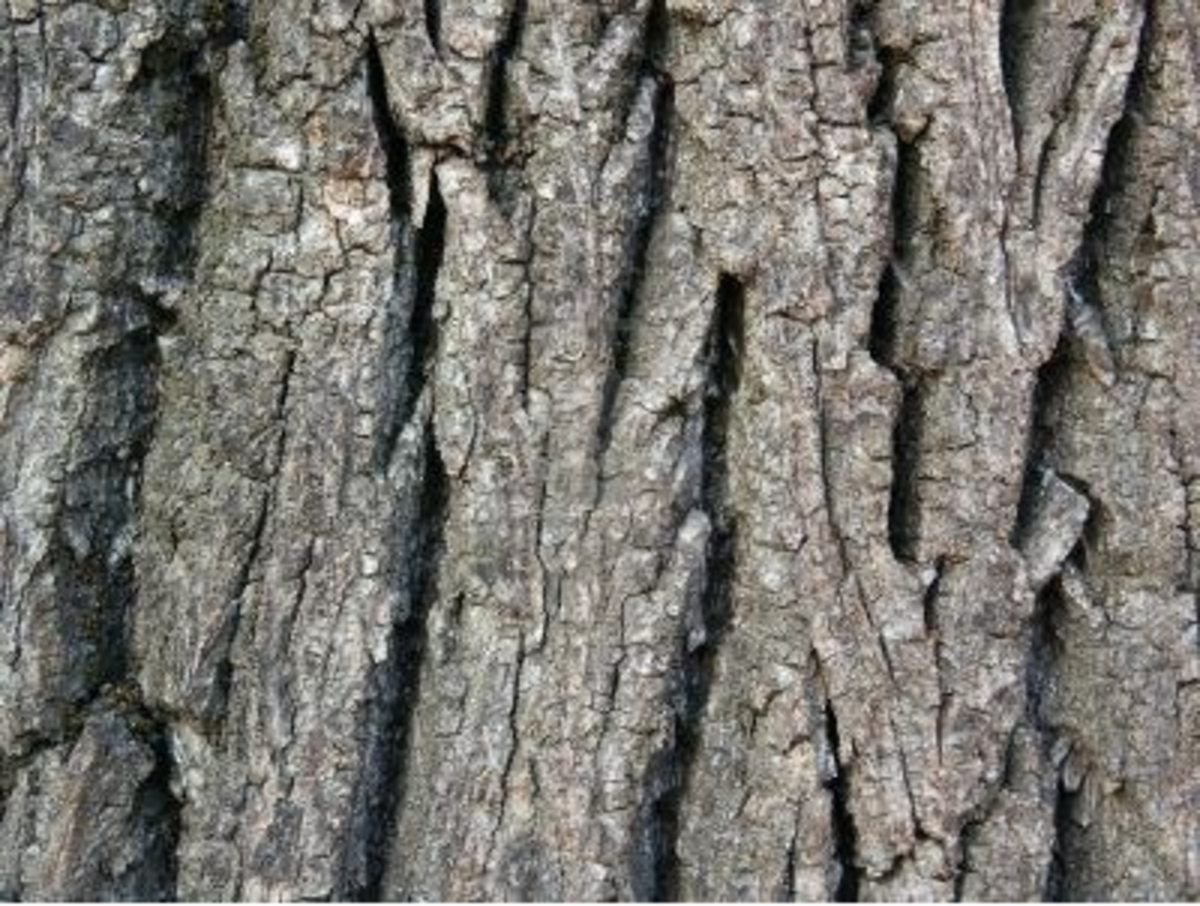
Using walnut tree bark to whiten your teethThis bark removes stains visibly when used. It is not the best tasting remedy but the results are worth is. Walnut tree bark can be found on walnut trees and some health food stores but be easily found online. How to use the walnut tree bark is listed below.
Walnut bark rub
  • Take a small piece of bark
  • Gently rub the bark on your teeth
  • Avoid rubbing your gums or rubbing to roughly
  • Brush your teeth as usual after 5 to 10 minutes

Using Orange Peels and Bay Leaves

Oranges
Orange peels and bay leaves together make a great at home teeth whitener. They are inexpensive and may already be in your kitchen. This only takes minutes. How to use this method is listed below.
Orange peel and bay leaf rub
  • Peel an orange
  • Take a few pieces of the peel
  • Rub the peel on your teeth
  • Crush up bay leaves until they are a powder
  • Rub the bay leaf powder onto your teeth
  • Leave on for 5 minutes
  • Rinse out your mouth with water
This method is best used once a week. The acidity of the orange peel eats away bacteria and gets rid of stains. The bay leaves soak up the stains and discoloration.

Using Bananas

Bananas
Banana peels are a great for whitening your teeth. They don't cause much damage and are inexpensive. This method is quick and easy taking only five minutes to use. How to use banana peels to whiten your teeth is listed below.
Banana peel rub
  • Peel a banana
  • Take a section of the peel and rub onto your teeth
  • Rub for two to three minutes
  • Then rinse your mouth with warm water
This method can be used once or twice a week.

Apple Cider Vinegar

apple cider vinegar
Apple cider vinegar can be used for many things. One of those things is whitening your teeth. It may not taste that wonderful but it works really well at removing stains. How to use apple cider vinegar to whiten your teeth is listed below.
Apple cider vinegar mouth rinse
  • Pour a small glass of the vinegar
  • Take a gulp without swallowing
  • Swish it around in your mouth like mouth wash
  • Spit out when you are done
  • Rinse your mouth out with warm water
This is best done once a week. The taste can be hard to handle but the results are worth it.
Apple cider vinegar and baking soda
  • In a small bowl mix the vinegar with the baking soda into a mixture that is the consistency of tooth paste
  • Apply the paste to your teeth
  • Leave on for 5 to 10 minutes
  • Rinse mouth out with warm water
  • Then brush teeth regularly

Using Baking Soda

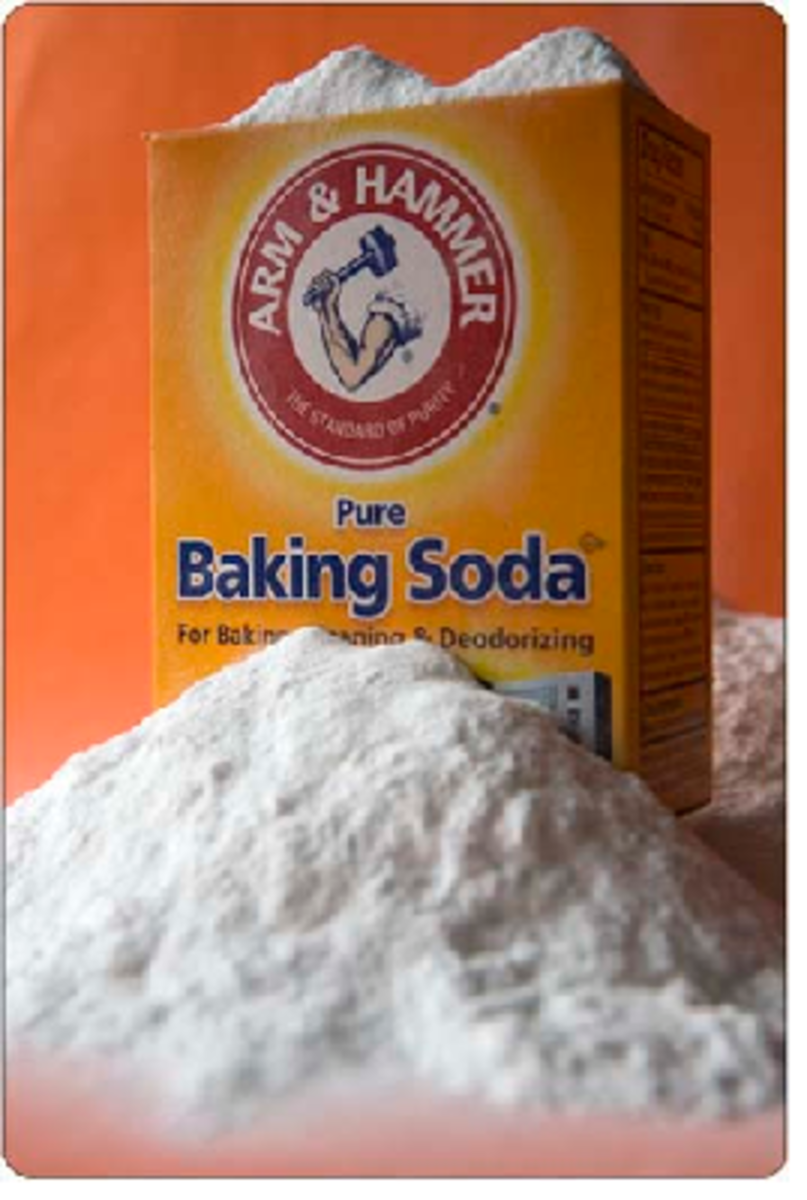
Using baking soda to whiten your teeth
Baking soda is another all natural product that can be used to whiten your teeth. The baking soda is able to be absorbed through the enamel and kills plaque and lightens stains. How to use baking soda in tooth whitening listed below.
Using baking soda as a toothpaste
  • Mix a spoon full of baking soda with a little water
  • The consistency should be that of tooth paste
  • Then brush your teeth with the mixture
  • Try not to swallow any
  • Leave the mixture on your teeth for 10 minutes
  • Then rinse your mouth with warm water
  • Wait another 5 minutes and then brush your teeth with tooth paste ass usual
Mixing baking soda with toothpaste
  • Mix a small amount of toothpaste with some baking soda
  • Brush your teeth as usual
  • Rinse your mouth with warm water
Both of these methods are effective and have been used for a long time. The first method takes longer but has better results and should only used once a week at the most. The second method can be used a couple of times a week and takes less time.

Prevention

Once your teeth are sparkly white you probably want to keep them that way. Using the all natural whitening methods regularly will help to do this but there are some things you can avoid or cut back on to prevent stains altogether.Some of the common culprits of stains are listed below.
  • Coffee
  • Dark tea
  • Dark sodas and soft drinks
  • Dark liquors
  • Cigarettes
  • Drug abuse
  • Tomato sauce
  • Blueberries
  • Citrus fruits
  • Chewing tobacco
  • Some prescribed medications
  • Acid reflux disease
The best way to keep your teeth beautiful and healthy is to brush and floss regularly. This helps prevents stains by removing plaque quickly.
Source: http://hubpages.com/style/How-to-whiten-your-teeth-naturally-at-home